Hormones and Endocrine Health
Most of what circulates about post cycle therapy is a list of drugs and doses copied between forums for twenty years. Very little of it explains what the drugs are doing, which is why so many people run the same protocol, get a testosterone result of 250 ng/dL six weeks later, and have no idea whether it worked.
This is the mechanism, the drugs, and the bloodwork. Nothing here replaces a doctor, and in India the drugs discussed are prescription medicines for a reason.
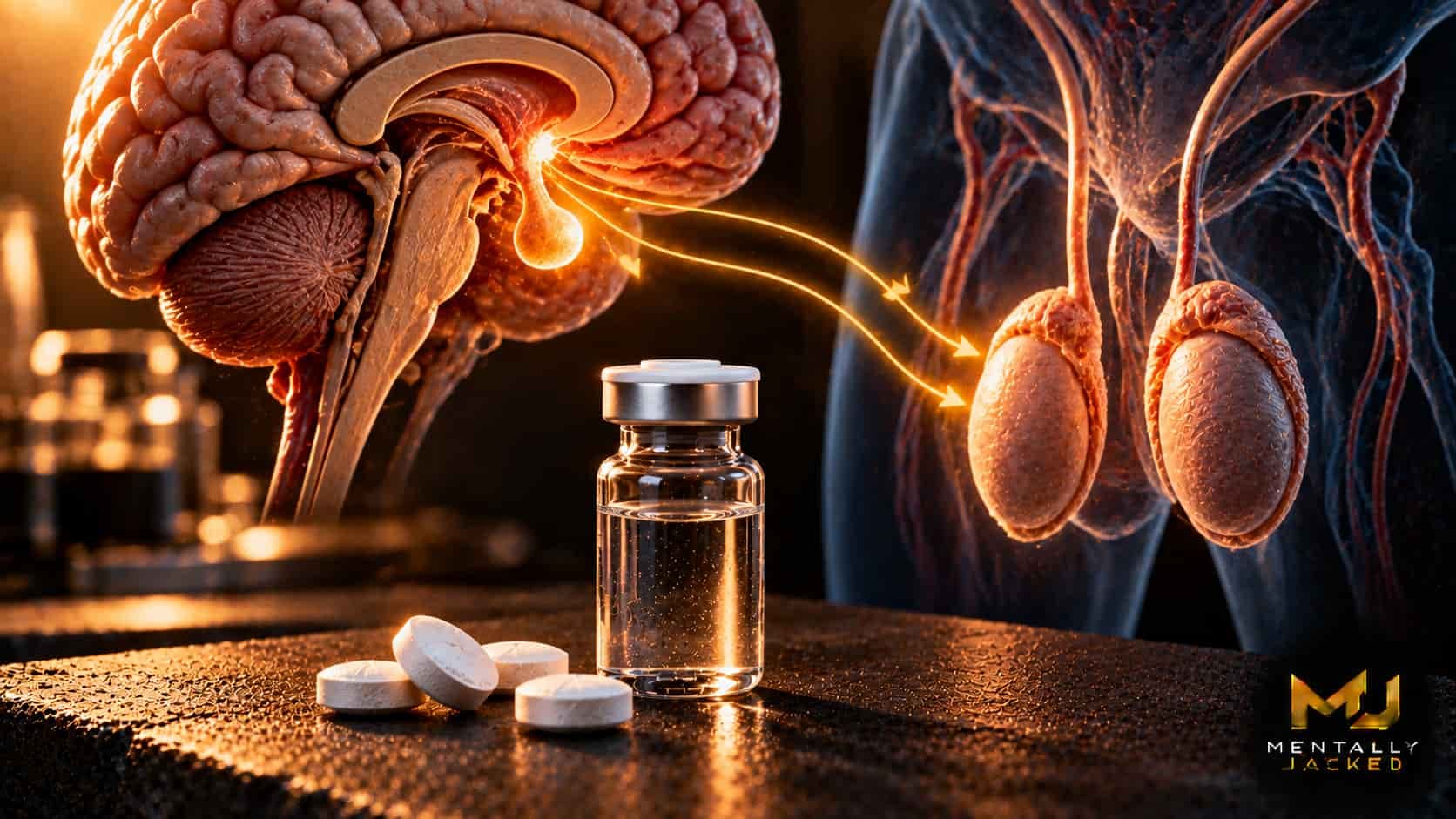
Testosterone production runs on a chain. The hypothalamus releases GnRH. The pituitary responds with LH and FSH. LH tells the Leydig cells in the testes to make testosterone, and FSH drives sperm production.
Exogenous androgens switch the chain off at the top. The hypothalamus and pituitary sense high androgen levels and stop signalling. LH and FSH fall to near zero. The testes, receiving no signal, stop producing and shrink.
Recovery means three things happening in order: the hypothalamus starts releasing GnRH again, the pituitary responds with LH, and the testes respond to the LH. Each step can be the one that stalls, and each of the PCT drugs works on a different step.
Nothing restarts while exogenous testosterone is still high enough to suppress the axis. Starting a SERM while a long ester is still releasing wastes the first weeks.
The serum testosterone PK model shows the actual blood level curve for the ester and dose used, which turns those rough waits into a date.
Clomiphene citrate, sold as Clomid, is a selective oestrogen receptor modulator. It blocks oestrogen receptors in the hypothalamus, which removes oestrogen's braking effect on GnRH and drives LH and FSH up. Typical use is 25 to 50 mg daily for four weeks.
The catch is what clomiphene is made of. It is a mixture of two isomers: enclomiphene, which does the useful work, and zuclomiphene, which is weakly oestrogenic, has a half-life of around 30 days, and accumulates. Zuclomiphene is behind most of the side effects associated with Clomid: mood changes, visual disturbances, and a lingering oestrogenic effect that outlasts the course.
Enclomiphene is the useful isomer on its own. It raises LH, FSH and testosterone without the zuclomiphene drag, clears in days rather than weeks, and in the trials run for its development, at 12.5 to 25 mg daily, it restored testosterone in men with secondary hypogonadism while preserving sperm counts, which testosterone therapy does not.
It was never approved in the United States. It is available in India as a prescription tablet from several manufacturers, and it has largely replaced clomiphene in PCT for people who have access to it. The usual range is 12.5 to 25 mg daily for four to six weeks.
Tamoxifen is another SERM with a similar action at the hypothalamus, typically at 20 mg daily. It is somewhat weaker than clomiphene at raising LH but has two advantages: fewer of the mood and visual effects, and a direct blocking action at breast tissue that protects against gland growth during the recovery period, when oestradiol can rise as LH returns.
Many protocols combine tamoxifen with clomiphene or enclomiphene. The evidence for the combination over either alone is thin. It is common practice rather than proven practice.
Human chorionic gonadotropin mimics LH. It acts directly on the testes, bypassing the hypothalamus and pituitary, and restores testicular size and function while the upper chain is still suppressed. That makes it useful in two places. During a cycle, at 250 to 500 IU two or three times a week, it keeps the testes responsive so there is less to recover. And in the bridge between the last injection and the start of a SERM, at 500 to 1,000 IU two or three times a week for two to three weeks, it wakes the testes up so they are ready when LH returns.
It does not belong alongside the SERM phase. HCG suppresses the pituitary's own LH output, so running it through PCT undoes what the SERM is trying to do. Stop it before the SERM starts.
HCG comes as a powder that has to be reconstituted, and the maths is where errors happen. The HCG reconstitution calculator turns vial size and water volume into the syringe marking for the dose.
Aromatase inhibitors are a different case. An AI lowers oestradiol. Oestradiol is part of the signal that tells the axis to recover, and crashing it slows recovery, damages lipids, joints and mood, and kills libido. AIs have a place during a cycle for a measured high oestradiol. In PCT they belong only where a specific, measured oestradiol problem exists, and then at the lowest dose that fixes it.
This is a description of what is commonly done, with the mechanism behind each stage, for people who will do it regardless. It is not a prescription.
The PCT protocol builder adjusts that structure to the compounds, doses, cycle length and ester actually used, which matters because a 20-week cycle with a 19-nor needs a different approach from an 8-week testosterone-only run.
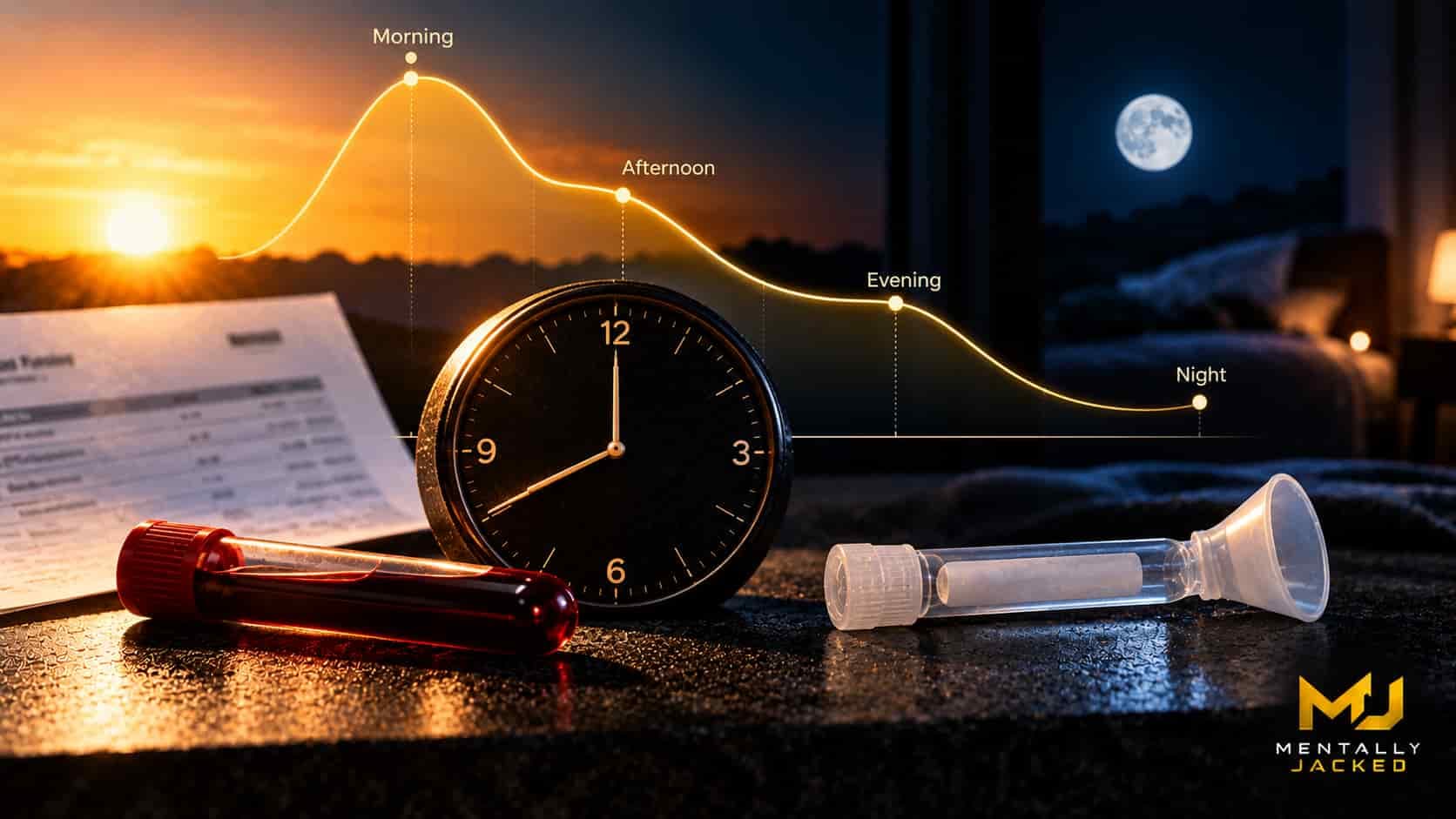
Recovery is a set of numbers, not a feeling. Test four to six weeks after the last SERM dose, morning and fasted: total and free testosterone, LH, FSH, oestradiol, SHBG, prolactin, lipids and a blood count.
The last one is the common error. Testosterone measured during clomiphene is a drug effect. Only a result taken weeks after stopping shows what the axis does on its own.
Long cycles, high doses, 19-nor compounds, age above 35, and low testosterone before the first cycle all make full recovery less likely. Some men do not recover after the first cycle. Some do not recover after the tenth.
The pattern of high LH with low testosterone is the one that suggests the testes themselves are damaged, and no SERM fixes that. At that point the honest choice is between a longer recovery attempt under an endocrinologist and accepting testosterone replacement for life. Both are legitimate. Running another cycle "to feel normal" is neither.
PCT restarts a three-step chain. Wait for the ester to clear, prime the testes with HCG before the SERM, then use enclomiphene, clomiphene or tamoxifen for four to six weeks to restart LH. Keep AIs out unless oestradiol is measured high. Test four to six weeks after the last dose, and read LH against testosterone to see which step recovered and which did not.
A period of medication after a cycle of anabolic steroids intended to restart the body's own testosterone production, which exogenous androgens suppress. It usually involves a SERM such as enclomiphene, clomiphene or tamoxifen, sometimes preceded by HCG.
For most people, yes. Enclomiphene is the active isomer of clomiphene without zuclomiphene, the long-lasting oestrogenic isomer responsible for most of Clomid's mood and visual side effects. It is available in India on prescription.
Once the exogenous testosterone has cleared enough to stop suppressing the axis: roughly 3 to 5 days after short esters, 10 to 14 days after enanthate or cypionate, and 3 to 4 weeks after nandrolone decanoate.
Before it, not during it. HCG primes the testes in the gap between the last injection and the SERM, but it suppresses the pituitary's own LH, so running it alongside the SERM works against recovery.
Bloodwork four to six weeks after the last SERM dose. LH and FSH back in range with testosterone near your pre-cycle baseline means recovery. Testosterone measured while still on the SERM does not count.
Often, particularly after shorter cycles at moderate doses in younger men. Long cycles, high doses, 19-nor compounds and age reduce the odds. A pattern of high LH with low testosterone after PCT suggests the testes themselves have been damaged and needs an endocrinologist.
This article is educational and is not medical advice, and is not a recommendation to use any compound. The drugs discussed are prescription medicines. See the medical disclaimer.
Want a programme built around your own numbers?
Work With Dinesh
Hormones and Endocrine Health
Hormones and Endocrine Health

Hormones and Endocrine Health

Newsletter
One email when a new guide, calculator or breakdown goes live. Nothing else.