Nutrition and Supplementation
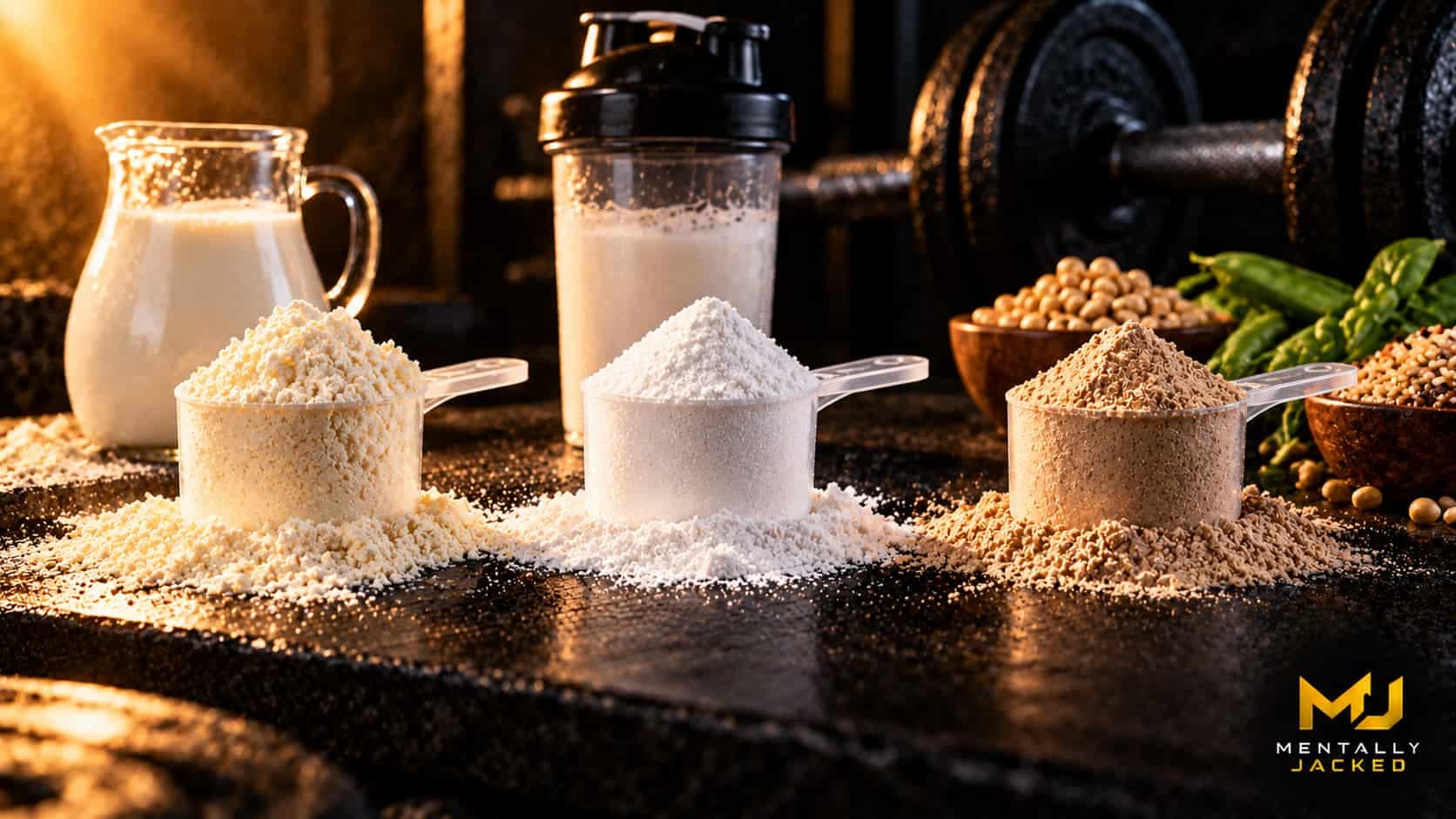
Walk into any supplement shop in India and you will be told isolate is "better". It costs more, it is purer, it absorbs faster. All three claims are half true, and the half that is true does not matter to most of the people paying for it.
Here is what the three main types actually are, who each one suits, and what to check on the label before you spend anything.
Whey concentrate is whey with most of the water removed. It is typically 70 to 80 percent protein by weight. The rest is lactose, a little fat, and minerals. It is the cheapest form and the one used in most research.
Whey isolate has been filtered further. It is 90 percent protein or more, with lactose usually below one gram per serving and almost no fat. It costs more because the extra filtering costs more and removes yield.
Hydrolysed whey is isolate that has been partly broken down into shorter peptide chains. It absorbs slightly faster and tastes bitter. It is the most expensive form and has no advantage for muscle gain that has shown up in trials.
Plant proteins are extracted from pea, soy, brown rice, hemp or a blend. Protein content varies from around 70 to 85 percent. Pea and soy have reasonable amino acid profiles. Rice and hemp are weaker on their own.
The only number that matters is how much protein you get per rupee. Everything else is marketing.
Work it out per 25 grams of protein and concentrate wins by a wide margin. Isolate gives you about four extra grams per scoop for 60 to 80 percent more money. For most people, then, a well-tested concentrate is the buy. God of Supps stocks whey concentrate across the main brands if you want to compare on price per gram.
Three situations, and only three.
Lactose intolerance. A large share of Indian adults lose the enzyme that digests lactose after childhood, with rates highest in the south. If concentrate leaves you bloated and gassy, isolate fixes it. That alone justifies the cost for those people.
A very tight cut. In the last weeks before a shoot or a stage, three grams of carbohydrate and a gram of fat per scoop, taken three times a day, adds up. For everyone else it does not.
Ultra-low fat medical diets. Rare, and usually prescribed.
"Faster absorption" is not on the list. Whey concentrate already absorbs quickly. The difference between concentrate and isolate is minutes, and muscle protein synthesis runs for hours.
Closer than the whey industry suggests, with one adjustment.
The amino acid that triggers muscle protein synthesis is leucine. Whey is roughly 11 percent leucine. Pea and soy sit around 8 percent, rice a little lower. So gram for gram, plant protein delivers less of the signal.
An eight-week trial in 2019 by Banaszek and colleagues compared pea protein with whey in people doing high-intensity training. Strength and muscle thickness improved similarly in both groups. Earlier work from Babault in 2015 found the same with pea versus whey in untrained men.
The practical rule that comes out of this research is simple: take about 20 to 25 percent more plant protein per serving to match the leucine in whey, and choose a blend over a single source.
Soy carries a reputation for lowering testosterone. A 2021 meta-analysis of 41 studies by Reed and colleagues found no effect of soy protein or isoflavones on testosterone in men at normal intakes. The fear came from two case reports of men eating extraordinary amounts.
This is where money gets lost. Three things to check before anything else.
Protein per serving against serving size. A tub that claims 24 grams per 33 gram scoop is 73 percent protein. One claiming 24 grams per 30 grams is 80 percent. Compare on percentage, not on the big number on the front.
Amino spiking. Cheap amino acids such as glycine, taurine and creatine count as nitrogen on the standard protein test, so a tub can pass a lab test while delivering far less usable protein. If glycine, taurine or "amino blend" appears high in the ingredient list, or the label lists creatine without saying how much, be suspicious.
Third-party testing. Look for a batch-specific certificate of analysis from an NABL-accredited lab, ideally viewable on the brand's website. Informed Sport or Labdoor certification is a strong signal. An FSSAI licence number is the legal minimum, not a quality mark.
Two more details worth a glance. "Protein blend" with soy listed first means you are buying mostly soy at whey prices. And "with added glutamine" or "digestive enzymes" changes nothing measurable.
Total daily protein matters far more than any single scoop. The protein calculator gives you the daily target from your weight, body fat and goal. Divide it across four or more meals and you have the plan.
A scoop of 25 to 40 grams per serving is enough to maximise the response in most people. More is not wasted, it simply counts toward the day rather than doing anything extra at that meal. Timing around training matters far less than it used to be thought, as long as the day's total is hit.
Nothing in whey builds muscle that paneer, eggs, chicken, fish and dal cannot. Powder wins on cost per gram, on convenience, and on hitting a target on a vegetarian diet where whole foods are carbohydrate-heavy. The Indian diet planner builds a day of real meals to your protein target and shows how much of it a scoop or two needs to cover.
If you are eating 60 grams of protein a day from food and topping up with three scoops, the powder is doing the job. If you are already at 150 grams from food, the extra scoop is a snack.
Concentrate is the default and the best value. Isolate is for lactose intolerance and the final weeks of a cut. Hydrolysed adds nothing. Plant protein works if you take 20 to 25 percent more and choose a blend. Check protein percentage, watch for amino spiking, and demand a batch certificate.
Only for people who are lactose intolerant or on a very tight cut. For muscle gain the two perform the same. Concentrate costs far less per gram of protein.
Nearly, once the serving is increased by about 20 to 25 percent to match the leucine content of whey. Trials comparing pea protein with whey alongside training found similar gains in strength and muscle size.
No. A 2021 meta-analysis of 41 studies found no effect of soy protein or soy isoflavones on testosterone in men at normal intakes.
Compare protein as a percentage of the scoop. Concentrate should be 70 to 80 percent, isolate 90 percent or more. A 30 gram scoop with less than 20 grams of protein is a poor product.
Adding cheap amino acids such as glycine or taurine so the powder passes a nitrogen test while delivering less usable protein. Check the ingredient list for those additions.
Look for a batch-specific certificate of analysis from an NABL-accredited lab, a third-party certification such as Informed Sport or Labdoor, and buy from the brand's own site or an authorised seller. An FSSAI number alone is not proof of quality.
This article is educational and is not medical advice. See the medical disclaimer.
Want a programme built around your own numbers?
Work With Dinesh
Nutrition and Supplementation
Nutrition and Supplementation
Nutrition and Supplementation

Newsletter
One email when a new guide, calculator or breakdown goes live. Nothing else.